
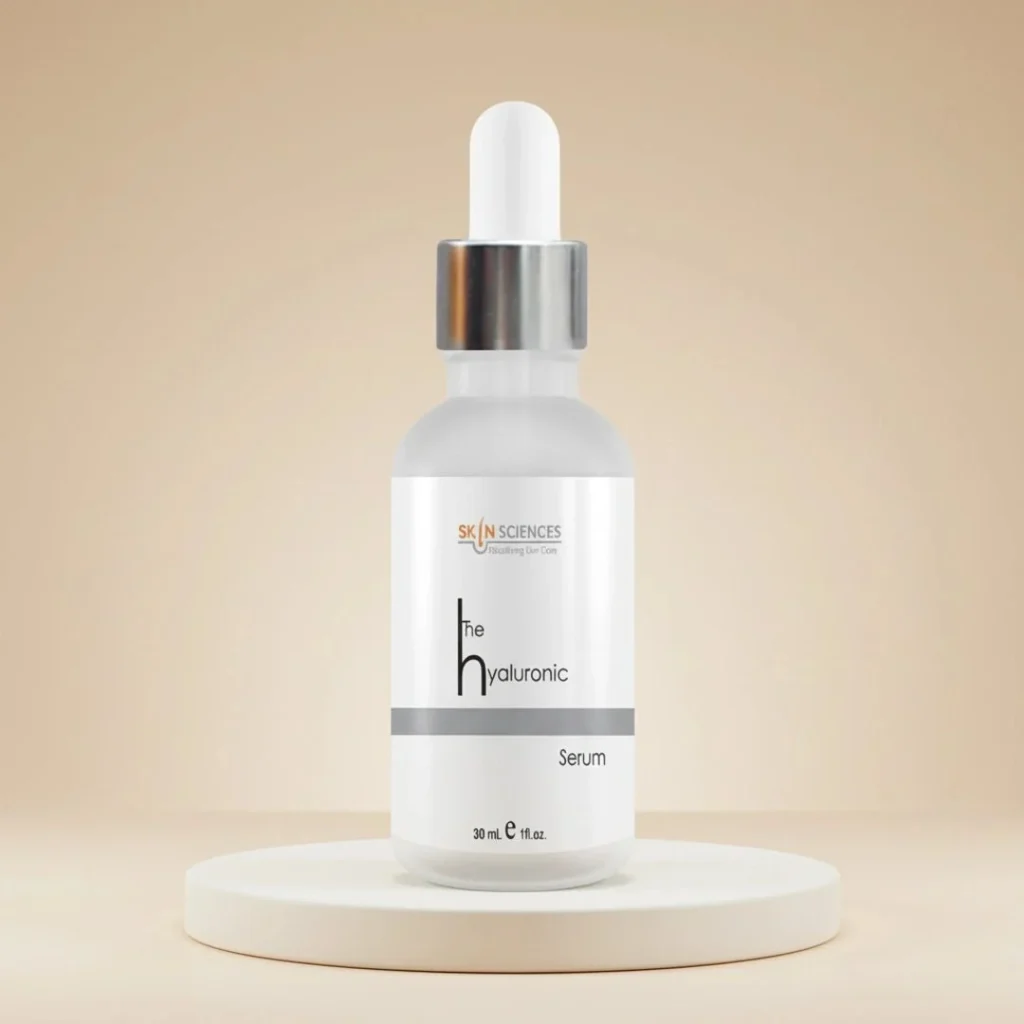
Hyaluronic acid does not dry out skin on its own, but it can make skin feel drier if you use it in the wrong way. The usual causes are applying it on completely dry skin, skipping moisturizer afterward, or using it in very dry air. Once you fix these, most people get the hydration they were expecting.
Why People Think It Dries Out Skin
Hyaluronic acid is a humectant, which means it attracts and holds water. One molecule can hold many times its own weight in water. That sounds like it should always help, so it surprises people when their skin feels tight after using it.
The reason is simple. A humectant needs water to hold on to. If there is no water on your skin or in the air around you, it looks for water somewhere else. In that case, it can pull moisture up from the deeper layers of your skin instead of from the surface. Your skin then loses water to the air faster, and you feel dry and tight.
It is worth saying that most of this explanation comes from how the ingredient behaves and from dermatologist experience, not from large studies. Still, the pattern shows up often, and the fixes below work well.
When Hyaluronic Acid Can Make Skin Feel Dry
1. You apply it on completely dry skin. This is the most common mistake. Without surface moisture, the serum has little to bind with.
2. You skip moisturizer. Hyaluronic acid draws water in, but it does not lock it there. A moisturizer seals that water in. Without one, the water can evaporate.
3. The air is very dry. Air conditioned rooms, winter heating and low humidity all reduce the water available around your skin.
4. Your skin barrier is damaged. If you recently over-exfoliated or used strong retinol or acids, your skin loses water easily, and hyaluronic acid alone cannot fix that.
5. The product has other irritating ingredients. Sometimes the dryness is not from hyaluronic acid at all. Alcohol, strong fragrance or harsh preservatives in the formula can dry your skin out.
6. The concentration or size is not suited to your skin. Very high percentages do not always work better, and some people simply feel tight with certain formulas.
Is It Dryness or Dehydration?
Many people use “dry skin” and “dehydrated skin” to mean the same thing, but they are different.
- Dry skin lacks oil. It feels rough and flaky and is a skin type.
- Dehydrated skin lacks water. It can feel tight, look dull and show fine lines, even in oily skin. It is a temporary condition.
Hyaluronic acid helps with dehydration. If your skin is truly dry and lacks oil, you need a moisturizer with ingredients like ceramides or glycerin alongside it.
How to Use Hyaluronic Acid So It Does Not Dry Your Skin
- Wash your face and leave it slightly damp. Do not rub it fully dry.
- Apply 2 to 3 drops of the serum on damp skin.
- Apply a moisturizer right after, while your skin is still a little damp, to seal in the water.
- Use sunscreen in the morning.
At Skin Sciences, we often see people skip step 3, which is usually why a good serum seems not to work. Hydration is a two-step job: water in, then seal it.
You can use it morning and night. In very dry weather, a slightly damp face and a thicker moisturizer make a bigger difference than a stronger serum.
What to Look for in a Hyaluronic Acid Serum
- Multiple molecular weights, or the label “sodium hyaluronate”, which can hydrate both the surface and slightly deeper layers.
- Fragrance-free and alcohol-free formulas, especially for sensitive skin.
- Supporting ingredients such as glycerin, panthenol or ceramides that help the skin keep water.
- A simple ingredient list. More ingredients do not mean better results.
Who Should Be Careful?
Hyaluronic acid is generally gentle and suits most skin types, including oily and acne-prone skin. Still, be careful if:
- Your skin is very sensitive or reactive. Patch test first.
- You live or work in a very dry, air-conditioned space and use it without a moisturizer.
- You notice redness, itching or stinging that continues. This could be a reaction to the formula, so stop using it and ask a dermatologist.
True allergy to hyaluronic acid is rare.
Can You Use It With Other Skincare Ingredients?
Yes. It works well with vitamin C, niacinamide, retinol and sunscreen. It can actually soften the dryness that retinol and acids sometimes cause. Just keep the order simple: serums first, moisturizer next, sunscreen last in the morning.
How Long Does It Take to Work?
You may feel more bouncy and hydrated in minutes, but that is a temporary plumping effect. Longer-term improvement in skin texture and dullness takes about 2 to 4 weeks of regular use together with a good moisturizer.
Frequently Asked Questions
Can hyaluronic acid make my skin feel tight?
Yes, if it is applied on dry skin or not followed by a moisturizer. Apply it on damp skin and seal it in.
Should I apply it on wet or dry skin?
Slightly damp skin gives the best results.
Can I use hyaluronic acid every day?
Yes. Daily use is safe for most people.
Is hyaluronic acid good for oily skin?
Yes. It adds water without adding oil, so it suits oily and combination skin.
Does hyaluronic acid cause breakouts?
It does not usually cause breakouts. If you break out, check the other ingredients in the formula.
Do I still need a moisturizer?
Yes. Hyaluronic acid brings water in, and a moisturizer keeps it there.
Final Thoughts
Hyaluronic acid is not a drying ingredient. It becomes one only when the conditions around it are wrong: dry skin, dry air or no moisturizer. Apply it on damp skin, follow it with a moisturizer, and choose a simple, fragrance-free formula. If your skin still feels tight after a few weeks, look at your wider routine, since over-exfoliation or a damaged barrier is often the real cause.